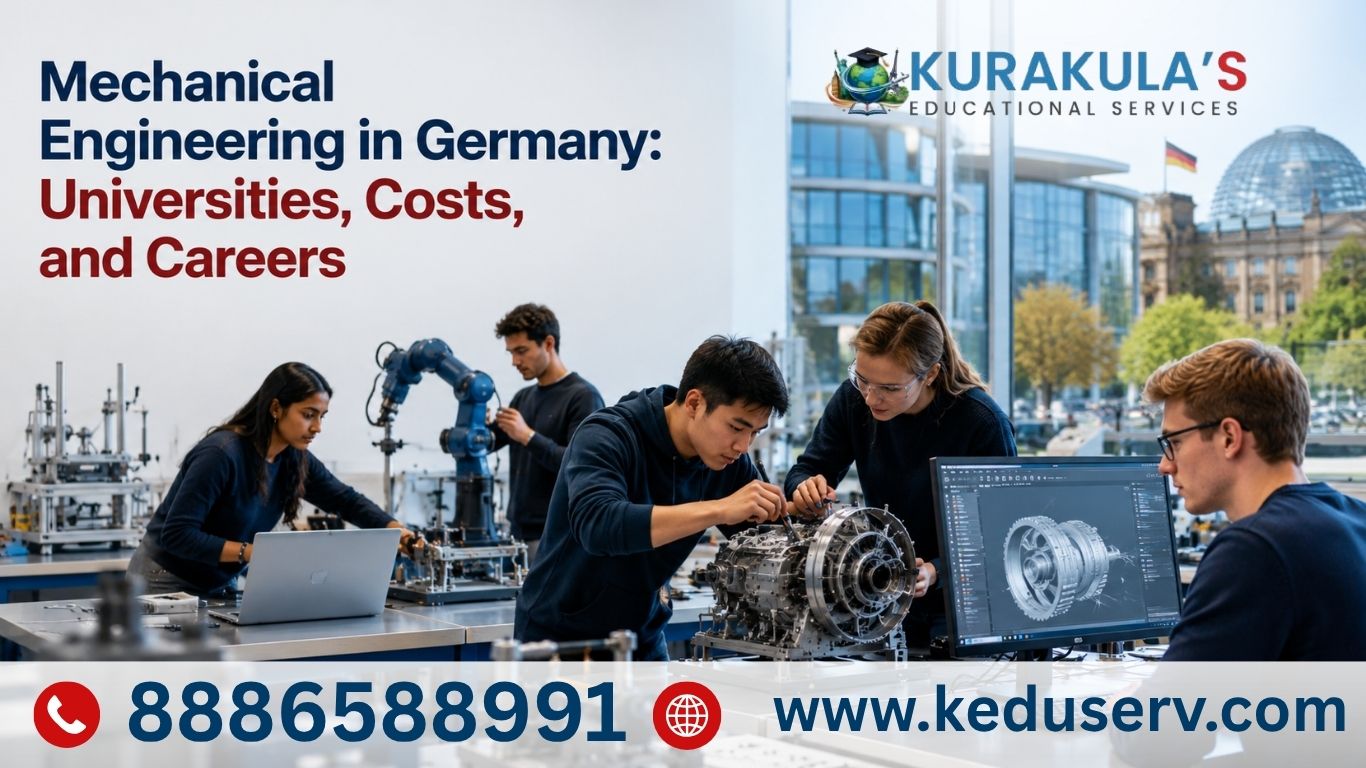
Mechanical Engineering in Germany: Universities, Costs, and Careers
Germany is well known for its engineering expertise, advanced technology, and strong manufacturing industries. For students interested in machines, automotive technology, robotics, and industrial innovation, studying mechanical engineering in Germany can be a good choice for building technical knowledge and preparing for an international career.
The country offers a range of universities and programmes, allowing students to choose courses based on their interests, academic background, and future career plans.
Why Study Mechanical Engineering in Germany?
Mechanical engineering is an important part of Germany's industrial sector. Students can study subjects such as machine design, manufacturing, materials, thermodynamics, automation, and mechanical systems.
Depending on the programme, students may also gain practical experience through laboratory work, projects, internships, and research.
Popular specialisations include:
* Automotive Engineering
* Robotics and Automation
* Manufacturing Engineering
* Mechatronics
* Energy Engineering
* Aerospace Engineering
* Production Technology
Top Universities for Mechanical Engineering
Germany has several respected universities and technical institutions offering mechanical engineering programmes. Some options students may consider include:
RWTH Aachen University
Known for its strong focus on engineering, technology, research, and industry-related education.
Technical University of Munich (TUM)
The university offers diverse engineering programmes with a strong focus on technology, innovation, and practical learning.
University of Stuttgart
The university offers strong opportunities in mechanical engineering, automotive engineering, production technology, and other related technical disciplines.
Karlsruhe Institute of Technology (KIT)
Combines technical education with research and offers programmes in various advanced engineering areas.
TU Dresden
Offers engineering education across several technical disciplines with a strong focus on research and innovation.
Students should compare individual courses carefully because admission requirements, teaching language, fees, and course content vary between universities.
Cost of Studying Mechanical Engineering in Germany
The cost of studying depends on the university, programme, and student's nationality.
Many public universities generally do not charge standard tuition fees, although students usually pay a semester contribution. However, some universities or states may have specific tuition fee policies for certain international students.
Private universities generally charge higher tuition fees.
Students should also budget for:
* Accommodation
* Food and groceries
* Health insurance
* Transportation
* Study materials
* Personal expenses
Living costs can vary between cities. Major cities such as Munich and Stuttgart are generally more expensive than smaller university towns.
Language Requirements
Mechanical engineering programmes are available in both German and English, although English-taught options may be more common at the Master's level.
Students applying to German-taught programmes generally need to demonstrate German language proficiency, while English-taught courses usually require proof of English proficiency.
Studying in English does not remove the value of learning German, as it can support everyday communication and improve access to internships and career opportunities.
Admission Requirements
Requirements differ between universities and programmes. International students may need to submit:
* Academic certificates and transcripts
* Proof of language proficiency
* Passport
* CV, if required
* Statement of purpose, if required
* Other documents requested by the university
Some programmes may have additional academic or practical requirements. Students should check the official university website for the latest admission conditions before applying.
Career Opportunities After Graduation
A mechanical engineering degree can lead to opportunities in industries such as:
* Automotive
* Manufacturing
* Robotics
* Automation
* Energy
* Aerospace
* Industrial machinery
* Product development
* Research and development
Graduates may work as Mechanical Design Engineers, Manufacturing Engineers, Production Engineers, CAD Engineers, Project Engineers, Quality Engineers, or Automation Engineers.
The growth of electric mobility, robotics, smart manufacturing, and sustainable technologies is also creating new areas of opportunity for engineering graduates.
How to Choose the Right University
Before applying, students should compare:
* Course structure
* Language of instruction
* Tuition and semester fees
* Cost of living
* Specialisation options
* Internship opportunities
* Industry connections
* Career prospects
The right university should match the student's academic profile, budget, interests, and long-term career goals.
Kurakula's Educational Services
Kurakula's Educational Services helps students explore suitable universities and mechanical engineering programmes in Germany based on their academic background and career goals, while providing guidance throughout their study abroad planning and application journey.
Frequently Asked Questions
Is Germany good for mechanical engineering?
Yes. Germany has a strong engineering and manufacturing sector, making it an attractive destination for students interested in mechanical engineering and advanced technologies.
Are English-Taught Mechanical Engineering Programmes Available in Germany?
Yes. Some English-taught programmes are available, particularly at the Master's level. Students should confirm the programme's language requirements and instruction format before submitting their application.
Do I need to learn German?
It depends on the programme. German-taught courses require German proficiency, while English-taught programmes generally require English proficiency. Learning German can also be useful for internships and future employment.
What are the career options after mechanical engineering?
Graduates can explore careers in automotive engineering, manufacturing, robotics, automation, energy, aerospace, product development, and research.